
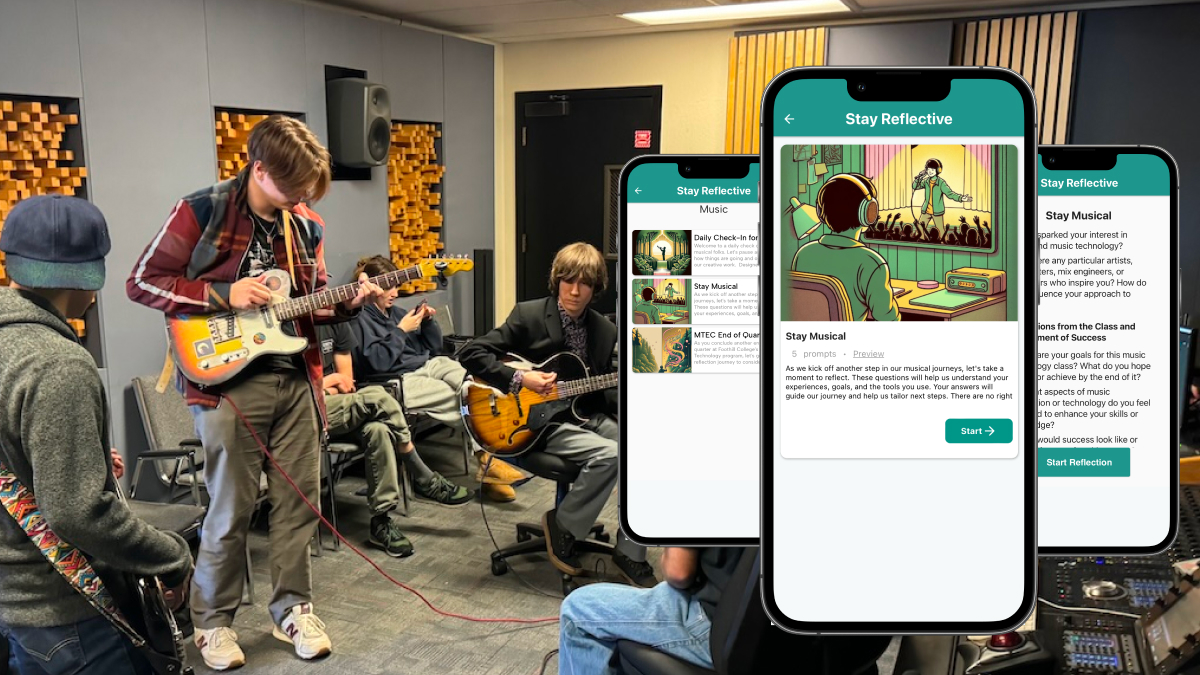
When Bruce Tambling, a veteran music technology professor at Foothill College, partnered with Stay Reflective for a pilot program, he wasn't just looking for another educational tool. He was seeking a way to help his students connect more deeply with their creative journeys and clarify their musical aspirations.
The results exceeded all expectations.
The Challenge: Connecting Students with Their "Why"
Music technology students arrive in class with diverse backgrounds and motivations:
- Some are aspiring producers looking to break into the industry
- Others are musicians wanting to understand the technical side
- Many are exploring music technology as a potential career path
The challenge? Helping each student:
- Clarify their personal goals in a technical field
- Connect coursework to their larger musical journey
- Develop self-awareness about their learning needs
- Stay motivated through technical challenges
The Innovation
This pilot represented one of the first applications of AI-enhanced reflection in music education, exploring how technology could deepen self-awareness alongside technical skill development.
The Pilot: "Stay Musical" Experience
In early 2024, Professor Tambling introduced the "Stay Musical" pilot as an optional, extra-credit assignment. The structure was elegantly simple yet profoundly effective.
The Five Core Reflection Questions
Students were prompted to explore:
- Musical Origins: What initially sparked your interest in music and music technology?
- Inspiration Sources: Which artists or producers inspire you most?
- Learning Goals: What do you hope to achieve in this music technology class?
- Skill Development: Which skills do you most need to enhance?
- Success Definition: What would make this course successful for you?
The AI Enhancement
Here's where Stay Reflective's technology made the difference:
- After students answered the initial questions, AI analyzed their responses
- The system generated personalized follow-up questions based on each student's unique answers
- These tailored prompts helped students dive deeper into their motivations and goals
The Results: Unprecedented Engagement
The pilot's outcomes surpassed traditional assignment engagement metrics:
By the Numbers
<StatsGrid stats={[ { value: "250+", label: "Total reflections written by students" }, { value: "50+", label: "Completed reflection journeys" }, { value: "90%+", label: "Utilization of AI-generated follow-ups" } ]} />
Qualitative Impact
The numbers tell only part of the story. Student feedback revealed deeper benefits:
"It was helpful to me in that it sorted out why I want to go down this path." — MTEC Student
This clarity about personal motivation translated into:
- Increased engagement in technical coursework
- Better connection between assignments and personal goals
- Enhanced self-awareness about learning styles and needs
Key Insights: What Made It Work
1. AI as a Reflection Partner, Not a Replacement
The AI didn't provide answers—it asked better questions. Students appreciated:
"I was surprised to receive good quality questions that made me think deeper about my responses." — MTEC Student
The technology served as a sophisticated reflection partner, helping students explore thoughts they might not have accessed on their own.
2. Personalization at Scale
Every student received questions tailored to their unique responses. This level of personalization would be impossible for an instructor to provide individually to every student, especially in larger classes.
3. Safe Space for Vulnerability
The optional, extra-credit nature combined with the ability to share (or not share) responses created a psychologically safe environment for honest reflection. Students could explore their doubts, dreams, and challenges without judgment.
4. Connection to Purpose
By clarifying their "why," students found renewed energy for the "how" of technical learning. Understanding their personal connection to music technology made the challenging technical content more meaningful.
Professor Perspective: Transforming Teaching
Bruce Tambling's reflection on the pilot reveals its impact on teaching practice:
"The Stay Reflective Experience has expanded my horizons as a teacher and helped empower students to navigate the synergy of human creativity and AI." — Bruce Tambling, Music Technology Professor
The pilot influenced his teaching approach by:
- Providing insights into student motivations he hadn't previously accessed
- Informing curriculum design based on actual student goals and needs
- Creating opportunities for more personalized mentoring conversations
- Demonstrating AI's potential as an educational enhancement tool
Implementation Lessons for Educators
Based on this pilot's success, here are key recommendations for educators considering similar initiatives:
1. Start with Clear Learning Objectives
- Define what self-awareness or reflection goals you're targeting
- Connect reflection activities to course outcomes
- Make the value clear to students
2. Make It Optional Initially
- Reduces resistance and increases authentic engagement
- Allows you to refine the process with willing participants
- Builds positive word-of-mouth for future iterations
3. Ensure Psychological Safety
- Give students control over what they share
- Frame reflection as personal growth, not evaluation
- Respect privacy and confidentiality
4. Connect to Course Content
- Link reflection insights to upcoming projects
- Reference themes in class discussions (anonymously)
- Help students see the practical value
The Broader Implications
This pilot demonstrates several important possibilities:
For Music Education
- Bridging technical and creative development through structured reflection
- Supporting diverse student pathways in music technology
- Enhancing student-instructor understanding and connection
for AI in Education
- AI as an enhancement tool, not replacement for human connection
- Personalization possibilities that scale effectively
- Supporting social-emotional learning alongside technical skills
For Student Success
- Increased clarity about personal goals and motivations
- Enhanced engagement through purpose-driven learning
- Better preparation for careers in creative industries
The Ripple Effect
Students who participated in the pilot reported continued use of reflection practices beyond the assignment, suggesting the development of valuable lifelong learning skills.
What's Next: Scaling the Impact
Following this successful pilot, several expansion opportunities emerged:
Institutional Integration
- Incorporating reflection modules into orientation programs
- Expanding to other creative disciplines (art, design, creative writing)
- Developing semester-long reflection journeys
Enhanced Features
- Group reflection capabilities for collaborative projects
- Progress tracking to show growth over time
- Integration with portfolio development
Research Opportunities
- Longitudinal studies on impact on student retention
- Correlation between reflection practice and academic performance
- Comparative studies across different disciplines
Student Testimonials: Voices from the Pilot
The true measure of the pilot's success came through student voices and experiences:
Finding Direction Through Questions
"It was helpful to me in that it sorted out why I want to go down this path. The AI asked follow-up questions I wouldn't have thought of myself."
— Alex Chen, MTEC Student
Alex entered the program uncertain about whether music technology was the right fit. Through the reflection process, he discovered his passion lay specifically in live sound engineering, leading him to focus his coursework and seek internships in that area.
Deepening Self-Awareness
"I was surprised to receive good quality questions that made me think deeper about my responses. It wasn't just 'how do you feel' but more like 'what does that tell you about your values?'"
— Maya Rodriguez, MTEC Student
Maya's reflections revealed that her strongest motivation came from helping other artists realize their vision. This insight led her to explore the producer-engineer role, ultimately changing her career trajectory toward artist development.
Connecting Past and Future
"The questions about my musical origins made me realize how much my cultural background influences my approach to production. That became the theme for my final project."
— Jordan Kim, MTEC Student
Jordan's reflections on family musical traditions and cultural influences became the foundation for an innovative final project exploring traditional Korean instruments in electronic music production.
Technical Implementation: Behind the Scenes
The Stay Reflective Platform Integration
The pilot leveraged Stay Reflective's sophisticated AI reflection system designed specifically for educational contexts:
Key Technical Features:
- Adaptive questioning algorithms that personalized follow-ups based on individual responses
- Progress tracking to show reflection journey development over time
- Privacy controls allowing students to keep reflections private or share with instructors
- Analytics dashboard for instructors to understand overall engagement patterns (without accessing individual responses)
Educational Customization:
- Custom question sets aligned with music technology learning objectives
- Integration with existing course management systems
- Flexible assignment structure supporting both required and optional participation
Data Privacy and Student Control
A critical aspect of the pilot's success was maintaining student trust through:
- Complete ownership of reflection content by students
- Opt-in sharing with instructors only when students chose
- Transparent AI processing with clear explanations of how responses informed follow-up questions
- Easy export options for students to maintain their reflection histories
Expanding the Impact: Beyond the Pilot
Influence on Course Design
The insights gained from student reflections influenced Professor Tambling's ongoing curriculum development:
New Course Elements:
- Purpose-driven project selection based on understanding student motivations
- Peer mentoring programs pairing students with complementary goals
- Industry connection initiatives aligned with discovered student interests
- Flexible learning paths accommodating diverse musical backgrounds
Cross-Departmental Interest
The pilot's success sparked interest from other departments:
- Art Department: Exploring reflection for creative process development
- Business Program: Investigating applications for entrepreneurial self-awareness
- Writing Center: Considering integration for academic reflection practices
Long-term Student Outcomes
Follow-up surveys six months post-pilot revealed lasting impacts:
<StatsGrid stats={[ { value: "78%", label: "Students continue regular reflection practice" }, { value: "65%", label: "Report increased career clarity" }, { value: "89%", label: "Would recommend to other students" } ]} />
Your Institution's Reflection Journey
The MTEC pilot at Foothill College proves that AI-enhanced reflection can meaningfully support student success in creative and technical fields. The key is thoughtful implementation that:
- Respects student agency and privacy
- Connects to meaningful outcomes
- Enhances rather than replaces human connection
- Scales personalization effectively
Implementation Checklist for Educators
Phase 1: Planning (2-4 weeks)
- Define learning objectives for reflection component
- Develop initial question sets aligned with course goals
- Plan integration with existing assignments and assessments
- Establish privacy and data handling protocols
Phase 2: Pilot Launch (1-2 weeks)
- Introduce concept to students with clear value proposition
- Provide technical orientation and support resources
- Monitor initial engagement and address barriers quickly
- Collect feedback on user experience and question relevance
Phase 3: Iteration (ongoing)
- Analyze engagement patterns and student feedback
- Refine question sets based on effectiveness data
- Expand successful elements and modify challenging aspects
- Plan for scaling to larger groups or additional courses
Getting Started
For educators interested in similar initiatives:
- Start small with a pilot group or optional assignment
- Partner with purpose - ensure clear learning objectives
- Measure what matters - both quantitative and qualitative outcomes
- Iterate based on feedback - let student voice guide improvements
- Build institutional support through demonstrated student benefits
Conclusion: The Future of Reflective Learning
The Stay Reflective pilot at Foothill College represents more than a successful educational experiment. It demonstrates how thoughtfully applied AI can enhance the most human aspects of learning: self-discovery, purpose-finding, and creative growth.
As Bruce Tambling observed, this technology doesn't replace the teacher-student relationship—it enriches it by helping students arrive at deeper self-understanding that can inform more meaningful educational conversations.
For music technology students navigating the intersection of creativity and technology, having a tool that helps them reflect on their journey proved invaluable. The pilot's success suggests similar benefits await students in any field where personal passion meets professional development.
Interested in bringing AI-enhanced reflection to your institution? Contact Stay Reflective to explore pilot opportunities tailored to your educational goals.